Regardless of whether you're recording low pitch guitar or hip-jump or a traditional group of four, you would now be able to create basically any sort of music on a PC. Be that as it may, while any PC can be utilized to deliver music in some capacity, the more genuine your aspirations, the more particular you should be while picking a PC for music creation.
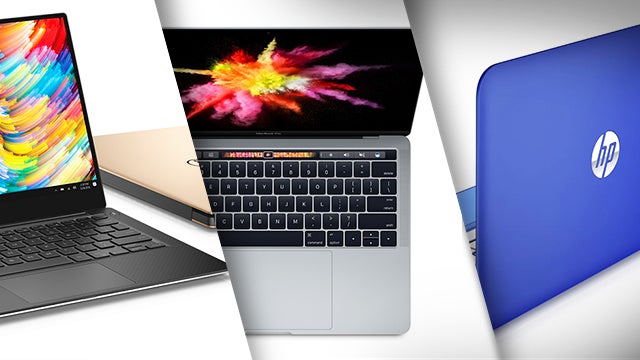
In the first place, how about we sort out how you will manage music on this PC, at that point we'll run down the fundamental choices and distinguish the main programming and peripherals.
Recording, Producing/Composing, or Performing?
Performers use workstations in an unexpected way. Many utilize a conventional methodology, recording tracks from mouthpieces and instruments, at that point blending them to make the end result. Hip-jump, pop, and EDM performers commonly utilize the actual PC to deliver the majority of the real sounds—programming the sounds into a sequencer or playing them on a MIDI console or touchpads associated with the PC. Be that as it may, they actually record vocals and some different sounds utilizing mouthpieces, and blend those in with PC created sound and frequently with bits of other craftsmen's accounts. DJs commonly do the entirety of the abovementioned and furthermore utilize the PC as a presentation gadget, frequently setting off everything with a regulator that has touchpads two or three turntable-style circles for scratching.
Screen Size
The screen is significant on the grounds that it decides the size of your visual workspace. The more perplexing your creations, the more workspace you need. Practically any PC screen will allow you to screen 6 to 10 tracks of music easily, yet overseeing 30 tracks is almost inconceivable on a little screen.
More modest screens (10–13" slantingly) will settle effectively in rucksacks. For essential chronicle and blending, a little showcase is fine.
Average sized PCs (14–16") for the most part address a harmony among versatility and execution.
Enormous PCs (17–18") are incredible for music makers who need to screen many tracks without a moment's delay, which is the standard with hip-jump, pop, and EDM creations.
Portability
In case you're wanting to utilize your PC for live account or playing out, a more modest model is generally a superior decision since it's simpler to convey and occupies less room in front of an audience. Another thought in these applications is battery life. This isn't significant in homes or clubs where there's an outlet close by, yet may be crucial for versatile account. Additionally, in case you're intending to utilize your PC for a presentation or to record in clubs, it's a smart thought to pick a model with an illuminated console.
Processor
Music creation can put a weighty burden on a CPU, or processor, which is the core of any PC. Get the best, most competent processor inside your financial plan since it's once in a while conceivable to update it later. The more convoluted your creations, the more the CPU matters. Blending a tune in with 30 tracks, different tested instruments, and loads of advanced sound impacts requests an incredible PC.
There are two proportions of processor execution to remember. One is the quantity of centers. Each center can handle information freely, so adding centers significantly builds preparing power. A quad-center processor is the most ideal decision for music creation. The other measure is clock speed, which ordinarily runs from about 2.4 to 4.2 GHz. The quicker the better.
Slam
Slam, or irregular access memory, stores projects and information briefly when your PC is on. The more intricate the program, the more RAM it requires.
For music creation, you need at any rate 8 GB and ideally 16 GB of RAM, particularly in case you're working with a ton of recorded tracks as well as virtual instruments, or applying different impacts to your tracks. Fortunately, RAM is one of the more upgradeable parts of a PC, yet every PC has its cutoff points. It's ideal to pick one that can oblige at any rate 16 GB of RAM.
Capacity: HDD or SSD?
Sound records take up a ton of extra room: Just one muddled tune can undoubtedly fill 1 GB. This is the reason it's a smart thought to have at any rate 1TB of accessible stockpiling.
How that capacity is masterminded is an alternate issue. Your alternatives are a regular hard drive (HDD) that depends on at least one inside turning circles, a strong state drive (SSD) with no moving parts, or an outside HDD, which interfaces with your PC through USB.
Ports
To interface a PC with receivers, instruments, and other sound stuff, you'll need a sound interface, which will associate with the PC through a USB port. In case you're creating music straightforwardly on the PC, you'll additionally utilize USB to interface a console, MIDI cushions (for tapping out rhythms), and DJ regulators. Numerous music experts like to utilize control surfaces, which give an actual interface similar as a blending board, rather than controlling their chronicle and sound blending utilizing a mouse.
Workstations accompany in any event two USB ports, yet clearly you may need more, particularly on the off chance that you need to interface peripherals like a wired console or mouse, or an outside hard drive. Any PC's USB ports can be increased by interfacing a USB center point, however for convenient clients, that will be one more piece of stuff to convey.
Speakers/earphone jacks
Shockingly, these highlights don't make any difference much in a PC utilized for music creation. The speakers incorporated into PCs are exceptionally inferior quality gadgets that are just there for circumstances where you don't have anything else to tune in through. Nothing will sound great through them, and on the off chance that you attempt to tailor your blends to sound great through them, the music will likely stable peculiar when played on great speakers. You can utilize the earphone jack incorporated into the PC, however in many workstations, the intensifier associated with the earphone jack is of bad quality and may lose the sound of your earphones a piece.
Last Tracks
Whenever you've picked the PC, sound interface, and the DAW programming that is best for your requirements, you'll be prepared to make studio-quality music creations. Truth be told, a ton of the music you hear on the radio is made utilizing nothing more. All you need to add is your own innovativeness and creative mind. also check Lappy Reviewed
Raju Khan alone boy
ReplyDelete